


July 2018
How Hard Do You Really NEED to Exercise?
Many national and international health bodies have determined how much exercise one needs to live a healthy if not longer life. In general, the exercise prescription for health – not athletic fitness or weight loss – is to accumulate 150 minutes of moderate physical activity (MPA) per week or 75 minutes of vigorous PA (VPA) per week.
But does each type of intensity yield similar benefits IF you meet the weekly prescription?
A study from Japan based on health and activity surveys of over 83,000 respondents from baseline, 5-year and 10-year follow-up aimed to answer this question. In total, the surveyed data covered about 18 years of health and mortality records plus self-reports on activity.
The participants were divided into 3 groups: non-exerciser, MPA and VPA exercise. MPA was defined modestly as 3.0 METs – slow walking – and VPA was 6 METs – brisk walking. Estimated activity time and intensity was used to categorize what percentage of MPA or VPA each person did: 0% VPA, <30% VPA, >30% VPA.

“Compared with physically inactive subjects, physical active subjects showed significantly reduced risks of all-cause mortality.” Compared to those who did no VPA, both the under-30% and the over-30% VPA groups were statistically similar.
The bottom line is, doing some vigorous activity each week with more MPA is about as healthful as doing a lot of VPA so long as you meet the guidelines of each category: 150 minutes for MPA and 75 for VPA.
MSSE Apr. 2018
You Choose: Sedentary, Light and Moderate-Vigorous Activity?
In keeping with the theme of health and PA, this study out fo Wisconsin attempted to determine whether or not the amount of light (LPA) vs. moderate-vigorous physical activity (MVPA), when substituted for sedentary behavior (SB), impacted the physical function of older adults (ages 50-90).
Ninety-one older adults (~71) were measured on a few physical performance tests like the 400-meter walk, timed sit-stand for five times, walking speed, and balance time in a full tandem, half tandem and feet together stances. They were also provided activity monitors to wear for a week. This allowed the researchers to determine how much time the subjects spent in SB, LPA and MVPA. Then associations were made between their activity records and their physical performance scores.
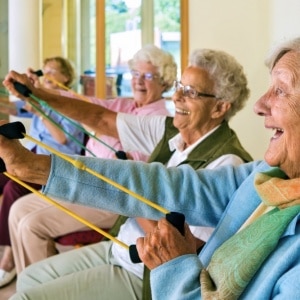
Whereas most studies have shown a clear relationship between MVPA and physical function, the question about LPA’s benefits remains. This study demonstrated that just 30 mins/day of MVPA is enough to improve one’s 400-m walk time. However, it would take 60 min/day of LPA to effect clinically-meaningful improvements in walking rate. Read additional articles here, here, and here.
They calculated that a 5:1 ratio of LPA to MVPA was enough to improve all measures of physical function for older adults. For better function, mix in some vigorous movement patterns with at least 60 mins/d of LPA.
MSSE Apr. 2018
Tid Bits
The human gut has trillions of microbes and bacteria that we now recognize as instruments of health or disease. An Illinois study had lean and obese subjects exercise for 6 weeks, 3 days/wk of 30-60 mins/d. They found that training induces “compositional and functional changes in the human gut microbiota” dependent on obesity status. MSSE Apr. 2018
High intensity exercise is all the rage. But is it better for older adults than moderate exercise? A study from Utah compared arterial flow-mediated dilation (FMD) after a 30 minute bout of 50%-55% (low intensity) and 75%-80% (high intensity) walking. Much to the dismay of some, after high intensity walking the blood vessels open up nice and wide but not after low intensity exercise for up to an hour. Both, however, reduce resistance artery function. MSSE Jan. 2018
Exercise guidelines for cardiovascular health suggest you get 30 minutes of continuous exercise or a few bouts of 10 minutes each day. A small study was done to see if this prescription worked to reduce post-meal triglycerides in older women. On separate occasions, the women walked 30 minutes continuously after a test meal; a week later they did 20 bouts of 1.5 minutes of walking every 15 minutes after the same test meal. It turned out that multiple short bouts modulated triglyceride and blood sugar responses as well as a longer, continuous bout. In other words, no more excuses that you don’t have time! MSSE Jan. 2018
 Standing Desks: Why All the Rage?