


August 2018
Resistance Training, Blood Pressure & Sleep
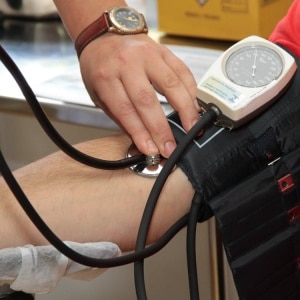
High blood pressure (HBP) is one of the most prevalent cardiovascular diseases in the US with estimates of 25% of Americans having it. HBP has recently been defined as a systolic (top) number above 130 mmHg and a diastolic (bottom) number above 90. Ideal is 120/80 or lower.
Nocturnal (nighttime) pressures are usually lower than daytime simply because you are rested/unstressed and supine, making it easier for the heart to pump blood throughout the body and brain. A nocturnal decline of 10-20% is considered normal; less than a 10% decline or more than a 20% decline are associated with greater cardiovascular risk.
While most studies have evaluated the benefits of cardio exercise to effect better BP control during sleep, few have compared these to the potential benefits of resistance training, especially among elderly patients. A Brazilian study of 70 subjects with HBP, ages 60-78, attempted to compare the nocturnal pressures after training 12 weeks of 3/wk cardio or RT sessions.
The RT involved 6-10 reps of 75% of maximal strength on 9 major weight training exercises. The cardio groups consisted of a continuous walking program at 70% of maximal aerobic capacity; and an aerobic ‘intervals’ group doing 2 minutes at ~80% of their max with 2 minute rest intervals of ~60%. There was a control group that simply maintained normal life without added exercise.
The results demonstrated a drop in diastolic pressure of greater than 10%. This suggests better sleep quality and reduced cardiovascular risk. In fact, the RT group had better nocturnal BPs than the continuous and interval aerobic groups. Furthermore, they improved strength and muscle mass, improving functionality, too.
JSCR July 2018
Roll Those Hamstrings Without Loss of Functional Strength
Foam rolling (FR) has matured as a pre- and post-workout mechanism to improve muscle flexibility and manage soft tissue soreness. However, studies have demonstrated that performing static, vs dynamic, range of motion (ROM) exercises immediately before activity might impair strength and power production.
A Cal State, Fullerton group evaluated the acute effects of a session of FR on the hamstrings – the back of the thigh – to see if they (1) permitted increased ROM, (2) effected muscle activation and peak torque and (3) affected hamstrings-to-quadriceps (H:Q) ratios adversely. Studies have shown that flexibility may impair function, so this is a noteworthy study in that FR is slightly different than stretching, per se.
Twenty-two female college-age subjects were pre-tested on all measures and taught how to FR their hamstrings. On a separate day, the stretching and testing were repeated. Not only did ROM improve from a bout of FR, peak torque did not decline as it would from regular static stretching. While muscle activation did decrease after FR, it also decreased in the quadriceps such that the functional H:Q ratio did not decline.
This study demonstrated that FR may have stretching and functional benefits that static stretching does not provide for in pre-activity warming up. Read about the many benefits of stretching here, here, and here.
JSCR July 2018
Tid Bits
In March, a study reported in JAMA Cardiology concluded that omega-3 fatty acid, or fish oil, supplements, for at least a year did not confer protection against heart disease. The meta-analysis of 78,000 subjects found rates of cardiac events were similar between those who took and those who didn’t take the supplements. Duke Health News June 2018
Can a new hip extend your lifespan? According to a large Swedish study of over 130,000 total hip arthroplasty (THA) patients over a 14-year period, it appears that those who had a THA lived longer than people of same gender and ages. This benefit ceased to exist beyond 10-12 years post-THA. This longevity boost only applied to those who got THA due to osteoarthritis; those who had THA for other health/medical reasons had lower survival rates. Duke Health News June 2018
Gluteus medius (Gmed) strengthening is a critical component of therapy for everything from low back pain to lower extremity injury. A study compared Gmed activation in the Step-Up (SU), Step-Down (SD) and Single leg squat (SLS). The SU was least demanding, with the lowest hip flexion and adduction forces and gluteus maximus, quads, and hamstrings activity. Since the SU was least demanding it would be a good starting task for hip strengthening protocols. SD and SLS were most demanding, requiring higher hip moments and muscle activity. JSCR 12/2017