
There are two crises – other than political and covid-19 – that America, and maybe the modern, Westernized world in general, though also the rest of the world everywhere, must face that will destroy humankind: obesity and diet.
And the fitness community, especially us professionals, has to accept our roles as potential solutions and causes.
The evolution away from subsistence diets such as our hunter-gatherer ancestors and early agricultural communities (usually family-based farms) has led to a glut of food products available to many and desired by all. From Coca Cola to McDonalds to all the junk foods one can find in a store from NYC to LA to Moshi, Tanzania, tasty, high-sugar, high-sodium, high-fat processed foods have saturated the bodies and minds of people everywhere.
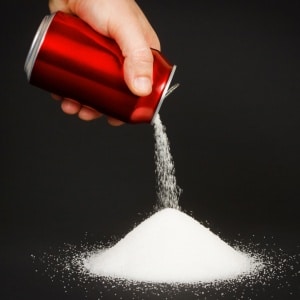
One can claim to be a purist and avoid and shun all fake foods but just because you shop at Whole Foods and the like doesn’t mean you eat healthy let alone live healthy. After all, the aisles are laden with processed foods marketed as ‘all natural’, ‘non-GMO’, etc. and a cookie by any other name brand is still a cookie.
All this food, or should I say calorie-availability, is not proof that people are no longer starving, literally and not just nutritionally. They are. Yet obesity is increasing around the world even where we would not expect it: China, India, Africa, South and Central America, places not known for reasonable if not equitable distribution of wealth and/or nutritional support.
But in America, the consequences of calorie-availability is now an epidemic. When over 67% of US adults are overweight (BMI between 25 and 30) or obese (BMI over 30) and nearly a third of our kids are, with many getting type 2 diabetes (T2D) which used to be called adult-onset diabetes, there’s real trouble here in River City. (See the classic play ‘The Music Man’ if you don’t know that jingle.) I’m not going to review the many diseases related to if not caused by carrying excess body weight (heart, metabolic, kidney, cancers, etc.) other than to say the short and long term consequences for the individual and society as a whole are devastating.
I’m not interested in reviewing causality or consequences so much as wanting to address two conversations on-going in the fitness communnity. We in the fitness world have to accept that we play a role in contributing to the emotional, psychological and even metabolic/health effects on our clients and followers (for those who are ‘influencers’.) And we might be able to play a salutary one, too.
The first pertains to an article recently published in the July 13, 2020 edition of IDEA Fit, a major professional organization that shares business and educational guidance and support for exercise and fitness professionals and studio owners. Two dieticians wrote about weight-bias, the inherent prejudices and biases we pros have and exhibit even if we don’t mean to, even if we try not to.
Without going into boring detail after detail, suffice it to say that the article was well-referenced, not simply an opinion piece like this one. After highlighting and finger-pointing to us all the subtle and not so subtle ways we show and express our bias toward those who are overweight and obese, the authors move on to a seven-point guidance as to how we should address weighty topics like weight. I would like to share my comments to the article in full rather than try to reconstruct them:
“I was encouraged by the first part of the article but dismayed at how readily the authors returned to the standards of weight-management coaching by fitness professionals. Once they started discussing the 7 strategies for working with those with obesity, they jumped right back on the traditional bandwagons of weighing in (“Tracking weight monthly or biweekly may be helpful in monitoring the trend over time, but it’s best to avoid daily weigh-ins, especially for clients who are hyperfocused on the scale or who have experienced unhealthy dieting behaviors in the past.”) and promoting such hope-inspiring benefits as eating healthier and exercising more (“When clients understand that improving their fitness and nutrition is what will help them feel better, even the most weight-focused clients begin to pay attention to their daily habits.”)
Both these and the other techniques imply eating less, moving more, no matter how you say it. There are many, too many obstacles and loopholes those with obesity have to face, deal with and confront that are not simply managed by eating healthier and exercising more, no matter whether we promote USDA and USDHHS guidelines for calorie counts (these are, after all, calorie counting formulae that are simply a bit more forgiving) or lifting more, faster, longer, etc (which are merely other ways of emphasizing move more.)
Granted this article in this journal can’t fully cover every aspect of weight management for those who are overweight or obese. But my personal, 35-years of professional guidance tries to limit any mention of calories and shift thinking toward choosing to add healthier (e.g. vegs and fruits, whole grains, etc) foods to the diet vs removing or even replacing foods we would consider (read: judge) as unhealthy.
And I don’t promote weight loss per se by using scales, body fat devices or even circumferences. I make that an option for the client by directing him/her to find an article of clothing at home that’s slightly too tight and using that as a gage for their own private ‘scale’.
But in the gym, my focus is simply on doing exercises that will facilitate better movement, mobility, balance and functional strength. With those under their belts, clients can choose what they wish to do about their weight but at least they’ll be healthy enough to enjoy living the lives they wish. Healthfully.”
Much of what I wrote back to these authors and my fellow pros who read this mag I have written here, here and here in times past. But that’s been for you, my friendly blog reader, not for my fellow fitness professional. My hope is to trigger some thoughts and self-reflection as to how we provide exercise and nutritional guidance to our gym members and clients. And while this only reaches a small portion of the American public, those who partake in fitness-related activities, the potential for wider-spread informational comments such as in print, TV, radio and on-line media might be shifted as a result. I can only hope.
In Part 2 of this thread of commentary, I will review the one-on-one conversation with a fellow trainer on the topic of macronutrient diet as it pertains to heart disease in particular but obesity in general.
 REAL News – July 2020