


June 2019
Do Kids’ Fitness and Fatness Affect Academics?
Most studies that compare kids’ academic performance to their cardiorespiratory fitness (CRF), motor function (MF) and body composition (BC) are cross-sectional. As other posts have noted, kids’ fitness affects future outcomes, as in this and this. That is, they compare groups of kids at a single moment in time. A longitudinal study from Finland looked at the same kids over a two year span to see how changes in fitness and fatness relate to academic and cognitive performances.
371 kids, ages 6-9, were tested on their CRF on a cycle ergometer; on shuttle runs, one-leg stand with eyes closed, and manual dexterity with a box-and-block test for MF; and DEXA scans for body fatness at the beginning and end of the study period. Cognition was assessed with a non-verbal reasoning standardized test called the Raven Colored Progressive Matrices (RCPM).

In boys, a higher CRF at baseline was associated with a lower RCPM at the 2-yr follow up. The BC scores didn’t impact boys’ academic capacities. Positive changes in fitness over the 2-yrs were associated with a smaller increase in the RCPM. In fact, boys with lower MF scores at baseline demonstrated lower cognition after 2-yr. Those in the lowest third of the MF scores fared worse in academics over the study period.
Girls’ baseline fitness, they found, had no apparent effect on their academic or cognitive performances 2-yr hence.
The best predictor of academic performance over a 2-yr span was how well the kids performed at the start of the study. Except for boys’ motor skills, which do seem to carry negative relationships over time to their academics, it seems fitness should be emphasized for health, not school.
MSSE Mar. 2019
Just a Spoonful of Resistance Exercise Helps Heart Disease Risk Go Down
Many factors contribute to a person’s weight over time, including inherited and socio-cultural elements. Weight loss programs – diets, diet+exercise, drugs – presume to effect each participant similarly but those who’ve tried them have had variable results. While many studies have found such variability from exercise programs designed to impact fitness, not many have looked at the effects of an exercise program on weight loss and body measurements. We have covered the issue of high intensity exercise in various other posts such as this, this, this and this, if you’d like more information about it.
A 24-week Canadian study sifted out 181 subjects from an original pool of 300 to determine and quantify individual variability in waist circumference and weight loss, to characterize the clinical utility of any one person’s changes and to identify some of the determinants of said variability.
All participants included were randomized into 4 groups: control (no exercise), low-amount/low-intensity (LALI), high-amount/low-intensity (HALI) and high-amount/high-intensity (HAHI) exercise. Dietary recommendations were individualized to meet Canada’s Food Guide standards but were not designed to be low calorie.
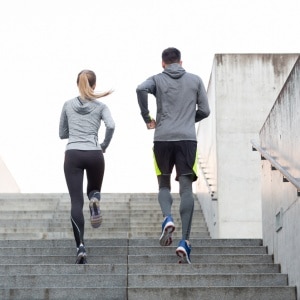
Only those in the HALI and HAHI exercise groups achieved clinically-meaningful weight loss and waist circumference changes, with HAHI achieving the best results.
Notably, women lost ~2.5 kg less than men in the HAHI group. Still the study could not determine “consistent predictors of individual response” to exercise weight loss programs. The authors said it would require nearly 4 times as many subjects to be able to identify such factors, a high bar to achieve in light of their own ability to capture just 60% of their original pool.
MSSE Mar. 2019
Tid Bits
A Gallup-Sharecare Well-Being Index surveyed data from all 50 states on diabetes and obesity. From 2008-2017, diabetes climbed from 10.8% to 11.5%, possibly a function of the aging of the population. Diabetes rates were stable in 19% of the states and rose in 44% of them. Obesity also climbed in 34 states. CBI Feb. 2019
Beware our sedentary kids! A meta-analysis of 50 studies that included 25 million kids ages 9 -17 from all continents found that they take 90 seconds longer to run a mile than they did 30 years ago. Their legs and hearts are slower and weaker than their parents but their fingers are much faster on mobile devices. Urbanization and automation seem to be sapping “healthy growth and development”. CBI Feb. 2019
A review of 40 clinical trials that included almost 22,000 subjects, average age 75, in JAMA Internal Medicine (Dec. 2018) found that regular exercise may help reduce your risk of falls and the rate of fall-related injuries. For those who exercised at least one year, there was a 12% reduction in falls and a 26% reduction of injuries from falls, and a 16% reduction in fracture risk. But it requires 2-3 sessions for a total of 3 hrs/wk to be effective. Focus on Healthy Aging Apr. 2019
 Is it Calorie-Restriction, Calorie-Reduction…or Weight Loss?