
September 2018
Pick Your Protein
The nutrition debate as to what to eat/drink before or after a resistance training exercise routine is not yet settled science. The consensus is that the anabolic window – that period of time that is conducive to building more muscle mass and strength – occurs within 30-60 minutes after a workout. It is during that time that most strength and conditioning specialists believe it is best to consume a protein-based meal or supplement.
While whey protein is considered the best source due to its speed and ease of absorption, some folks can’t do milk-based foods. So a study looked at using beef- or chicken-based supplements in comparison to whey or no supplements to see which yielded the best results from an 8-week training program.
With 5 males and 5 females in each of four groups, and each group doing 2 hypertrophy-oriented and 1 strength-oriented resistance training routines each week, the researchers hoped to discern which if any post-workout supplement conferred the most benefits to body composition and strength gain.

It turned out that either protein supplement- 46 grams, with subjects blinded to which one they consumed – both after the workout and on non-workout days improved body composition changes compared to not taking a protein supplement. That is, lean tissue increased and fat tissue decreased by significant percentages in each direction but not in the control group.
Furthermore, non-significant gains were made in strength in all groups. But only the whey group increased power significantly relative to the other groups. Thus, protein supplementation after a workout does indeed help you build muscle, burn fat and get stronger. JSCR Sept. 2018
If HIIT Isn’t a Fit, Try SIT
The vogue training mode of the 21st century is high intensity cardio training. Back in the Ken Cooper-aerobics days of the 70s and 80s, LSD – long, slow distance – was the thing and HIT or HIIT (high intensity interval training) was for track and other elite athletes. As daunting as it sounds, though, HIIT and its cousin Sprint interval training (SIT) may not only spare you several minutes of traditional cardio activity and give you better fitness results; it may even feel better.Hard to imagine, huh?
A recent study assayed young, healthy participants on how they felt during and after their moderate-intensity and 3 other versions of SIT and HIIT. During the workouts, subjects rated their levels of perceived exertion and on their Affect (11-pt scale), a measure of aversiveness to the routine. Ten minutes post-workout, the Physical Activity Enjoyment Survey was given to determine how the subjects felt about the exercise once completed.
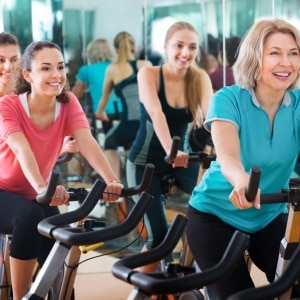
Surprisingly, despite higher levels of perceived exertion and of objectively-measured exertion, and higher levels of aversiveness during the more intense exercise routines, most subjects reported after-the-fact enjoyment of both SIT and HIIT. In fact, women were more apt than men to say they enjoyed the intense workouts. The weaker sex? I think not.
JSCR Sept. 2018
Tid Bits
The Harvard Men’s Health Watch (Sept. 2018) notes that a 2013 study found that, on average, older men lose between 25% and 33% of muscle strength between 60 and 70 years of age. This loss of strength is accompanied by loss of muscle mass – sarcopenia – and is best countered by a progressive resistance strengthening program with loads of 60%-85% of their maximal lifting ability.
We’ve all had that ‘tip of the tongue’ experience, especially as we age. But a recent British study reported in Scientific Reports (University of California, Berkeley Wellness Letter, Sept. 2018) that, while not a sign of cognitive decline, being physically fit did reduce the frequency of such lapses. Though a small study, it found that the older group (average age, 70) performed half as well as the younger (average age, 23), but that those elders who were aerobically fit performed nearly as well as the younger whippersnappers. Perhaps it was better blood flow to the brain?
The concept of being ‘fit and fat’ has been around for nearly 20 years. This states that one can be overweight, even over-fat, and still be heart-healthy so long as one exercises sufficiently to accrue fitness levels commensurate with age and gender standards. A European Heart Journal (03/18) study that followed 300,000 people without heart disease who were classified by BMI standards found that those who had higher BMIs were at greater risk for heart attacks, strokes and high blood pressure. This was especially true for those with larger waistlines. Another study in JAMA (02/18) found that middle-age men who stayed overweight shortened lifespans by ~6 years compared to those who kept normal weight over the same time span. Harvard Men’s Health Watch (07/18)
 REAL News August 2018