
 January 2017
Cardio + Resistance Exercise = Reduced Hypertension
Hypertension (high blood pressure) is the most common heart disease with approximately 80 million – that’s MILLION – americans affected. It has a variety of causes – age, weight, genetics, diet, sedentary lifestyle, etc. – and a multitude of adverse health consequences.
It has been demonstrated that a small reduction in systolic – the upper number – pressure, as little as ~5 mmHg, is enough to reduce the risk of cardiac events and strokes. While drugs and diets have been shown to lower blood pressure (BP), so has aerobic exercise. Resistance training (RT), too, has a minor benefit on blood pressure mostly in terms of improving quality of life and overall function to reduce the cardiac strain of activities of daily living or recreation.
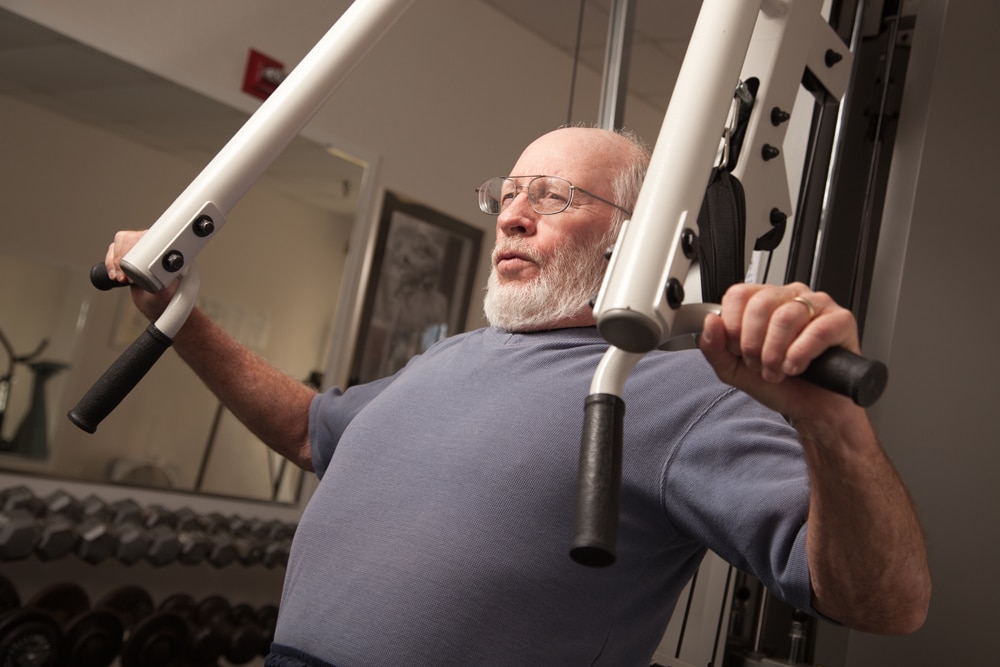
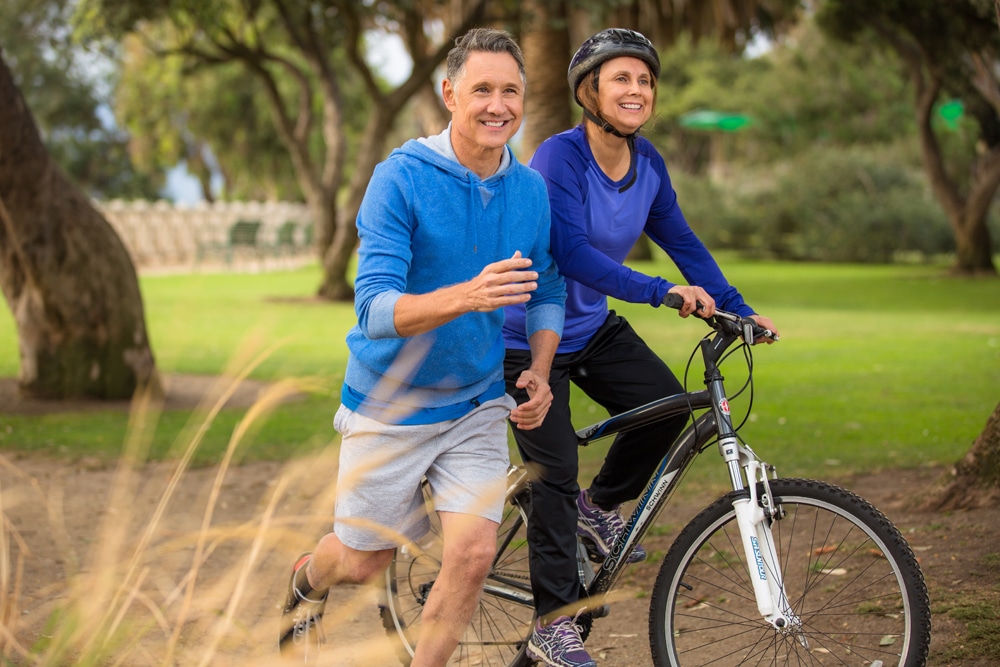
What has not yet been demonstrated is whether or not combined sessions of aerobic and RT exercise, called concurrent training, has a cumulative effect to lower BP. A meta-analysis undertook a review of the literature to determine the efficacy of concurrent training specifically on high blood pressure and to what effect exercise order mattered.
Of 68 studies that met the baseline criteria for inclusion, only 5 were of high quality enough to satisfy all the requirements for this analysis.
Most encouraging was the finding that moderate intensity concurrent training done for one hour three times a week reduced BP by about 3 mmHg compared to controls. For those who were hypertensive, they could get a greater benefit – 5 mmHg off their systolic and 6 mmHg off their diastolic pressures! Those numbers are considered medically significant.
What constitutes concurrent training? Some version of circuit training – alternating cardio and strength work, or cardio before strength work, or strength before cardio. Since there were a multitude of studies with various protocols, it is not possible to be specific with regards to how many minutes of one modality vs the other. Most professional and medical guidelines for aerobic exercise for health, especially for hypertension, recommends at least 30 minutes of cardio, most of them tried to get, on average, 35+/- 15 minutes, leaving about 32+/-19 for RT. Regardless of how the two modes are implemented, this could be a very comprehensive routine that is not overly demanding on either level. And yet, it could be a life saver.
MSSE Dec. 2016
Older Adults Needn’t Train Like Younger Athletes
A concept of exercise training called ‘periodization’ made its way into the science lexicon in the 1980s as research from the Soviet bloc made its way west. Basically, it was a new way of thinking as to how to make progress in strength and aerobic fitness. It entailed breaking the training season into components, with each one having a specific goal – like strength, size, power, speed, etc – and allowing for built-in rest and recovery phases. Now a standard for all strength and conditioning pros who work with athletes, the question some Australian researchers asked was, do older people have to train this way, too?
There are many models of periodization but they looked at two – block (BP) and daily undulating (DUP) – and compared them to no periodization (NP) over a 22-week strength training program. They were comparing changes in health outcomes like body mass index (BMI), % fat, lean muscle mass, blood lipids, C-reactive protein (a marker of overall inflammation related to heart health), blood pressure; and at physical functions such as balance, stair climbing, quality of life, chair rising, and maximal strength.
 BP consisted of progressively varying training loads over 4-week periods, whereas DUP varied training loads each session in a wave-like manner. Obviously the NP group simply did 3 sets of 10 at weights that kept them at their 10 rep maximum. All training was supervised and whey protein supplementation was provided after each session.
The results are profoundly encouraging. For one thing, group means showed that there were no group differences on systolic blood pressures, total % body fat, lean mass, fat mass and HDL cholesterol, the good kind. Likewise, there were no group differences in measures of physical function or strength; in quality of life measures, balance or confidence in doing activities of daily living.
However, this is not to say there were no benefits; it’s just that each group had similar benefits. Some of those included lowering blood pressure, total % body fat, fat mass; and raising HDL, lean mass, strength, balance, stair climbing, etc. In other words, you don’t have to train like a jock to benefit like one.
MSSE Dec 2016
Recipe of the Month
Fresh Spring Rolls with Shrimp
Used with permission of Mayo Foundation for Medical Education and Research (MFMER). All rights reserved. For more information go to http://www.mayoclinic.org/healthy-lifestyle/recipes.
Ingredients
2 c water 1/2 c thinly sliced Napa cabbage
8 large shrimp, peeled, deveined 1/2 c bean sprouts
1 oz cellophane noodles 2 Tbsp chopped fresh cilantro
1 c boiling water 4 rice-paper wrappers, 8 in. diameter
1/2 c shredded carrot 4 large fresh basil leaves, halved lengthwise
1/4 c peeled, seeded, julienned cucumber
For the sauce:
2 Tbsp hoisin sauce 1 1/2 tsp unsalted natural peanut butter
1 green onion, incl tender green tops, sliced thin 1/4 tsp red pepper flakes
1.5 Tbsp fresh lime juice pinch of brown sugar
1.5 tsp fish sauce
Directions
- Heat 2 c water to boil; add shrimp and remove from heat. Cover and poach, !~3 mins. Transfer cooked shrimp to bowl of ice water and cool 3 mins. Drain and cut each lengthwise in half; refrigerate
- Put noodles in 1 c boiling water and soak 10 mins. Drain and return to bowl; add carrot, cucumber, cabbage, sprouts, cilantro and toss gently.
- Place 2 2-ply sheets of paper towel on countertop. Fill large, shallow baking dish with water. Put 1 rice-paper wrapper in water, soak till pliable – 30 sec. put wrapper on paper towel and pat dry. Put 1/2 c of noodle mix on bottom half of wrapper.
- Fold bottom edge toward center, roll halfway up wrapping tight around filling. Tuck 2 basil leaf halves along inside crease; arrange 4 pieces of shrimp, cut sides up, along crease; fold edges of wrapper over filling and roll all the way up. Put on plate covered with damp towels.
- Combine sauce ingredients and stir till well blended.
Nutrition (per serving of 2 rolls):
Calories: 198 Protein: 10 g Carbohydrate: 34 g
Total fat: 4 g Saturated fat: 0 g Monounsaturated: 2 g
Fiber: 4 g Sodium: 512 mg Cholesterol: 44 mg
Exercise of the Month
PLANK

- The plank or abdominal bridge is an isometric core strength exercise that strengthens the abdominals, back, and shoulder muscles. Although there are many variations of the the plank, the most common plank is the front plank , with the body’s weight on forearms, elbows, and toes (similar to a push up position).
- The plank exercise increases core strength and stability, and is useful when training in pilates, yoga, boxing , and other sports.
Muscles involved in the front plank include:
* Primary muscles: erector spinae, rectus abdominis (abs), and transverse abdominus.
* Secondary muscles: traps, rhomboids, rotator cuff; the anterior, medial, and posterior deltoids;pectorals (pecs), serratus anterior, glutes, quadriceps, and gastrocnemius (calf).
Tidbits
An Australian study in Injury Epidemiology reported the quantity and nature of fitness center injuries over a 14 yr span of ER visits. Overexertion, strenuous and unnatural movements were the leading causes, especially on treadmills, with free weights, and in group exercise classes. Trips and falls accounted for many but errors and misuse of strength equipment led the pack. ACSM’s Health Fitness Journal, Jan. 2017
One would think that as people got fitter, they’d get more active. But an article in the Journal of the American Geriatric Society found that, for older people (70-85 y/o), this may not be the case. Two groups were studied for their movement patterns and abilities pre- and post- a six month study. One group lifted weights 3/wk while the other was the control. Despite getting stronger, improving endurance and balance, the exercise group did not engage in much more physical activity than they had before the study began. The authors suspect that other factors, like self-efficacy may not improve with fitness. ACSM’s Health Fitness Journal, Jan. 2017
An article in the American Medical Athletic Association’s Winter 2016 journal addressed some of the latest thinking on muscle cramps. The bane of many athletes, amateur or pro, sudden cramping of usually lower extremity muscles can bring one to the ground and out of play. Many studies have pointed to dehydration, low electrolytes, or prolonged muscle contractions, but a new hypothesis is on the table: neurogenic origins that, somehow, can be alleviated by certain types of drinks that trigger a “neural reflex in the oropharyngeal space”, or the mouth and back of the throat. Drinking or tasting pickle juice, apple cider vinegar, hot mustard have been shown to help with cramps. So does pinching the upper lip. Don’t ask me why, but give it a try if you start cramping .

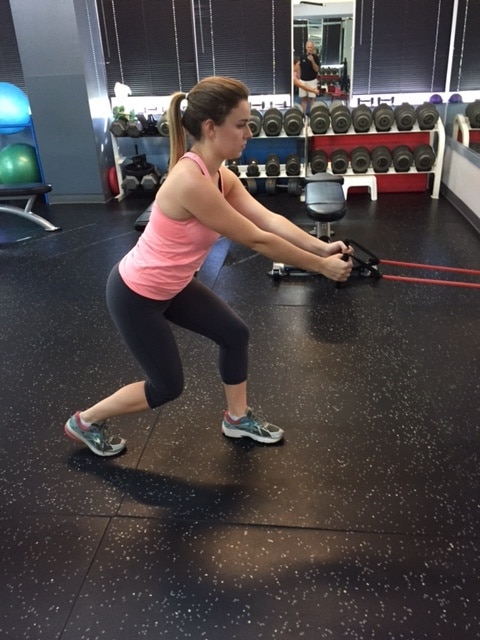 The Step-In Lunge & Row