

For many years now, exercise scientists have leapt on the protein wagon when it comes to building bigger and stronger muscles. Especially for those who cannot or do not consume enough high quality protein, the mantra, which derives from studies on athletes, the elderly and those who are hospitalized or being treated for medical conditions that diminish appetite, has filtered down to the public at large: supplemental protein will maintain muscle mass and, if you do resistance exercise, make you stronger, too.

As to whether or not this is true is one matter. The other is, is supplementation necessary? Let me address the former, first.
Many studies have demonstrated that protein balance in the body is disrupted by a variety of metabolic and physiologic confounders. Protein balance is a function of how much protein you consume or your body creates from the amino acids it combines to make a full protein (protein is made up of a variety of amino acids some of which the body has to get via the diet), and how much protein it uses for building, reconstructing or repairing damaged tissue.
The body will grow more and bigger and stronger muscles if they are partially damaged from exercise and subsequently repaired via diet and rest/recovery and the amount and rate of protein synthesis exceeds that of protein degradation.
Dieting/caloric restriction disrupts protein balance when the total caloric intake is not enough to sustain the muscles one already has and the protein is then broken down to its component parts to provide the substrate it prefers for energy and brain fuel: glucose, or sugar. It has long been known in medical centers that starvation – whether by choice or disease or otherwise – depletes the major limb and core muscles of protein and thus strength such that supplemental protein in the diet is prescribed.

One reason we exercise pros promote protein supplementation for those trying to lose weight is to maintain muscle mass and basal metabolic rate. Even still, once you start losing weight, you don’t lose just fat; you lose muscle. And the lower metabolic rate that follows requires you to eat even fewer calories to keep losing weight at the same rate.
Disease can also deplete muscle mass. Cachexia is the loss of muscle mass that occurs during disease or treatments that leaves people susceptible to reduced function, energy and even disease resistance. Supplementation with calories is first and foremost but usually includes higher-than-normal recommendations for protein unless the disease would be worsened by having to process it. Kidney diseases are commonly protein-restricted.
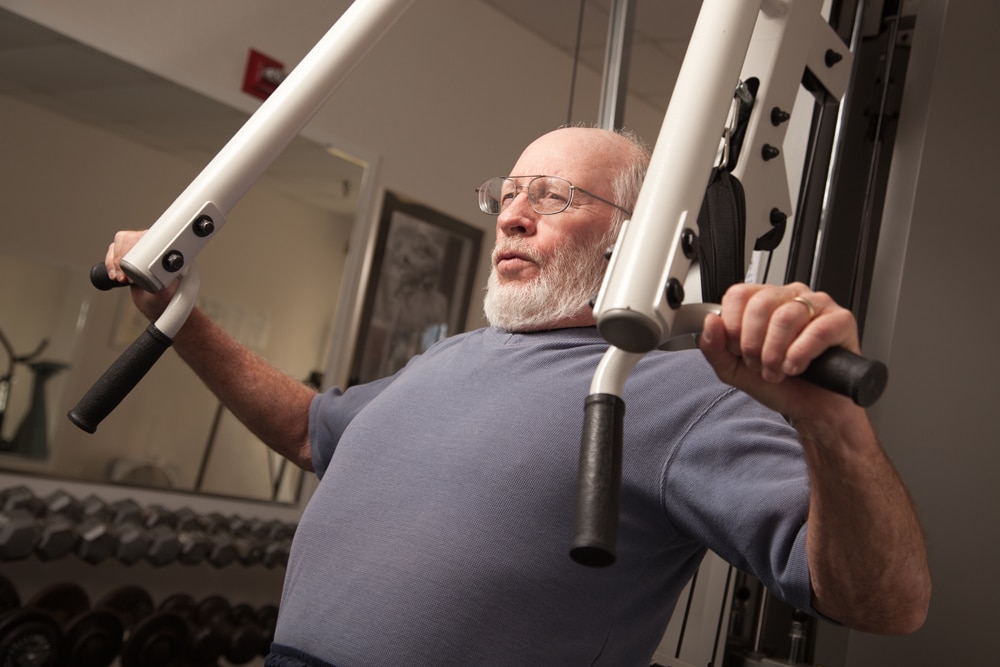
Aging, especially after age 60 or so, has been identified as a primary cause of muscle mass reduction unto itself. We lose muscle mass at varying rates starting in our 30s; I hate to put a number to it since those of us who exercise, especially with strength exercises, maintain our muscle mass more than those who have been sedentary in their post-high school years. Still, it takes more exercise and more training to keep what you had in your 20s and 30s, and extra protein can help. Protein can be beneficial for individuals on a variety of fitness levels. Learn more about protein supplementation here, here, and here.
At the end of the day, as this article alludes, more research is needed. But the authors, highly respected researcher in this area, argue that, since the benefits are small at best, maybe we should not be promoting supplementation. They base this on solid data in controlled experiments. Even in large prospective studies on elderly people who were asked to consume a protein drink in the morning and to continue daily routines, the gains were hardly remarkable. But many of these studies conclude that the benefits of protein supplementation are minimal likely because our diets already include sufficient protein.
The American Dietetics Association recommends something like 0.7-1.4 grams/kg/day. The lower number is easy to get IFFFF you consume enough calories of sufficient quality.
And this might be the kicker. Many modern, industrial societies have access to quality proteins and sufficient calories with which to create necessary proteins for the body’s use. But we also have sedentary lifestyles that don’t demand muscular effort and we have plenty of foods that disincline the body’s proper use of those calories toward beneficial structures such as muscle mass. Furthermore, many of us get the bulk of our protein in one main meal – dinner/supper- and our bodies can’t process large boluses of protein efficiently; thus it may get shuttled into our fat stores.
Even athletes at higher competitive levels may not be getting enough protein without supplementation. For one thing, they have to consume lots of calories. Many do not know how to properly prepare their dietary strategies. Those into heavy weight training often consume plenty of protein but studies of late have shown that the combination of sufficient calories and plentiful protein is often unmet; athletes who have trouble maintaining weight during training or competing are losing muscle mass just as dieters would. Supplementation may slow the rate of loss but hardly qualify as ‘good’ unless muscle mass is maintained or even enhanced.
So, in my fidelity to the research, this article is well worth reading and following up with the links embedded. But I also want to warn that there are select populations who can benefit from supplementation as they wish to maintain muscle mass against the tide of emotional, metabolic, pathologic, dietetic and physiological stressors. This may constitute a large percentage of our population, from the aged, to the ill, to the athletic.
So while more research is needed, I still support that my elderly clients consider a quick sweetened liquid source of protein either before or after their workouts…just in case.
 Wedding Vows Include Extra Calories