
I wish DIY was applicable in all aspects of life.
As a client told me the other day, when confronted by a minor repair of his toilet a few years back, he considered DIY. His son, a wise young man, suggested that, buying a $1 item to do the repair in order to avoid a $50 plumber’s visit simply raised the cost of repair to $51.
So when I read this blog that discussed how to design your own workout routine, I was intrigued: is it possible, without getting into a virtual book-length piece, to write something concise and detailed enough to help others do what I’ve spent years learning and still not perfecting?
The author, Jacky Anderson, was a 2-time Olympic hockey player. And while having trained, played and competed at elite levels of sport attests to one’s genetic and physically-conditioned attributes as a fit person counts, that alone does not confer expertise in training or conditioning.

This is not to suggest the Jacky is incompetent to write an article on designing a program. It’s merely to say that the smallest, least fit nerd with a solid background in exercise science could be better equipped, intellectually, to do this even from a wheel chair.
Still, each article must be read on its own merits, and Jacky’s is well worth considering both for its content and its organization. Let’s look at the latter, first.
Jacky’s table of contents looks like this:
- 4 #Warm Up
- 5 #Power Based Exercises
- 6 #Compound Lifts
- 7 #Single Leg Exercises
- 8 #Hamstring maintenance
- 9 #Upper Body
- 10 #Core
- 11 Training Efficiency
A warm up of some sort is healthful and critical, and the details offered here are legit. I would add, however, that not all warm ups require foam rolling. This is a current fad that many jocks attest to but that old jocks, like Muhammad Ali, Mickey Mantle, Michael Jordan, etc., never even heard of…because foam rollers hadn’t been invented. So, is rolling good, or useful? Yes. Is it critical? No.

Power based exercises are also good and useful, and I would suggest they are even critical. Where you place them in your routine or in your regimen is up to you, but the elite athlete’s ordering of these exercises are different from the goals and issues of a 65, let alone 85, year old’s. Still, I agree that these should be incorporated into everyone’s workout routines somewhere, sometime.
Compound lifts are also solid fundamentals, once you’ve learned, mastered and created a good foundation with more simple lifts. A biceps curl is simple for those of us raised in the gym world that became popular since the 1970s. For our grandparents, especially our grandmothers, this is not a very simple movement. So adding a curl to a squat or lunge is not as simple-sounding for some of our readers and ‘athletes’ as Jacky makes it out to be.
I do agree, however, that compound lifts should be taught and learned for all trainees simply because they (1) add flavor to basic lifts, (2) allow you to lift heavier weights faster in some of these moves, and (3) for granny, create neuro-muscular-cognitive stimuli that may enhance other aspects of fitness, such as balance, coordination and body-awareness.
Single-leg exercises are often neglected as elemental to a lifting program. We all think of lunges as good ‘shaping’ exercises but rarely do we highlight them from the standpoint of being as if not more functional than squats. Yet, we all move with one leg at a time.
So why not train towards doing things with only one leg?
This does not require we stand on one leg as that might be impossible for many of us. But it does suggest that we gradually move away from a solid, 2-leg stance like a parallel squat and start shifting toward a single, primary leg movement like a split squat or what I call a toe-squat. This is done with the toe of one foot behind or off to the side of the heel of the other foot. Less stable, more forward leg demand is more akin to what we do and need in life, at any age and stage.
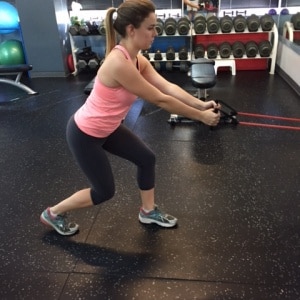
Hamstrings are often underworked in the athletic arena but Jacky, by giving them their own section, does the reader a favor by highlighting their importance. Athletes of any sport and age, and especially females, need stronger hams. The question for older people, however, is do they/we? And I would suggest that, yes, older non-athletes need stronger hamstrings because training hams for strength properly also increases their elasticity…which increases range of motion at the hips, and taking strain away from the low back. Jacky’s exercises may be too much for many but the idea of working the hams with a special focus is well worth considering for everyone.
The division of upper body movements into push and pull is old hat. Jocks tend toward more push – bench press – than pull. Jacky highlights the value of the latter – “DO NOT NEGLECT THE POSTERIOR CHAIN” – by putting these in capital letters. I would add putting them in BOLD caps.
If this is important for jocks, I would suggest they are even more important for non-jocks, older folks, and women of all ages. The reasoning re my gender emphasis is that women are facing a few forward bending forces that men in our society don’t face, including breast tissue, body image issues for taller, fattier or more buxom women, child-bearing postural demands, nursing babies and, maybe most importantly, because a woman who stands tall and erect assumes a more power posture in life and at work. So DO NOT NEGLECT THE POSTERIOR CHAIN!
Finally, the core, everyone’s new, since the mid-90s, word for abs. Jacky does not fail us here, unfortunately. As some of my other blog posts here and here and here have covered in greater detail, the core is not the abs alone. It includes the hips, the glutes, the low back, and even the inner thighs. Jacky gives the athletic reader exactly what he or she wants but does not give the more sophisticated reader what everyone really needs: not a six pack but a corset.
In conclusion, this article is a valiant attempt to cover all the bases of a fitness routine. It is aimed largely at a more fit if not more athletic population but it includes gems for all to build off of. With my only real gripe being about the core, I must admit that, though a long piece, Jacky Anderson does a very credible job in providing the fundamental elements of a fitness workout.
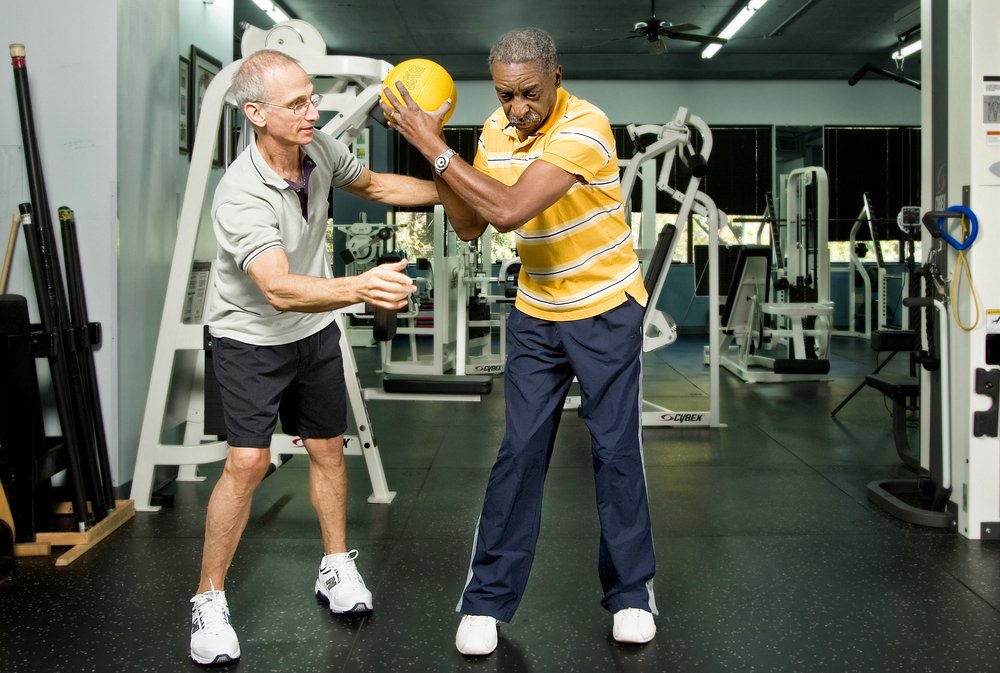
But a small, nerdy exercise specialist – like some personal fitness trainers I know – may be necessary to help you build the kind of workout you need at your stage in life. If you would like to learn more, read previous blog articles here, here, and here.
As for you trainers out there, here’s some relevant news you can use to boost your career.
 Obese and Heart-Healthy: The Paradox Continues